Blog
Blog posts
Growth is driven by compounding, which always takes time. Destruction is driven by single points of failure, which can happen in seconds, and loss of confidence, which can happen in an instant. - Morgan Housel, Psychology of Money
Working with data requires holding two things true at once. You must constantly investigate, experiment, and explore while building certainty, understanding, and stability. It’s about trust. Bringing some order to chaos which is what data is.
General product management - a vague notion I know but think of any physical product or technical service - relies on the former truth with the latter coming as the investigation comes to a close.
When building with data, there is always something new with your input. The ground is shifting under your feet. It makes sense to flow with it.
Over the years of building data products and teams, I’ve found a couple of differences. Not massive but real. And worth talking about.
Core Focus & Responsibilities
- User-Centric DNA: Everything revolves around user needs and experiences
- Broad Scope: Lives at the intersection of engineering, business, and UX
- Qualitative Decision-Making: Heavy reliance on user feedback and market insights
Data Product Management:
- Data-Centric DNA: Data shapes every decision and feature
- Specialized Scope: Operates where engineering, business, and data meet
- Quantitative Decision-Making: Lives and dies by metrics and experiments
This is a dramatic simplification. A data product manager is a product manager first. Jason Cohen writes, “the role centers on deciding what to build.” It’s deceptively simple and a data product manager has to do the same. The difference lies in the material and constraints.
A SaaS PM is product focused and while they have to manage the business viability risk (can the business support and benefit from this product), they often have fewer hard constraints on what to build with.

The Skills Gap That Actually Matters
General PMs need:
- Market research chops
- Customer development expertise
- Business strategy understanding
- Basic technical knowledge
In addition to those core things, Data PMs require:
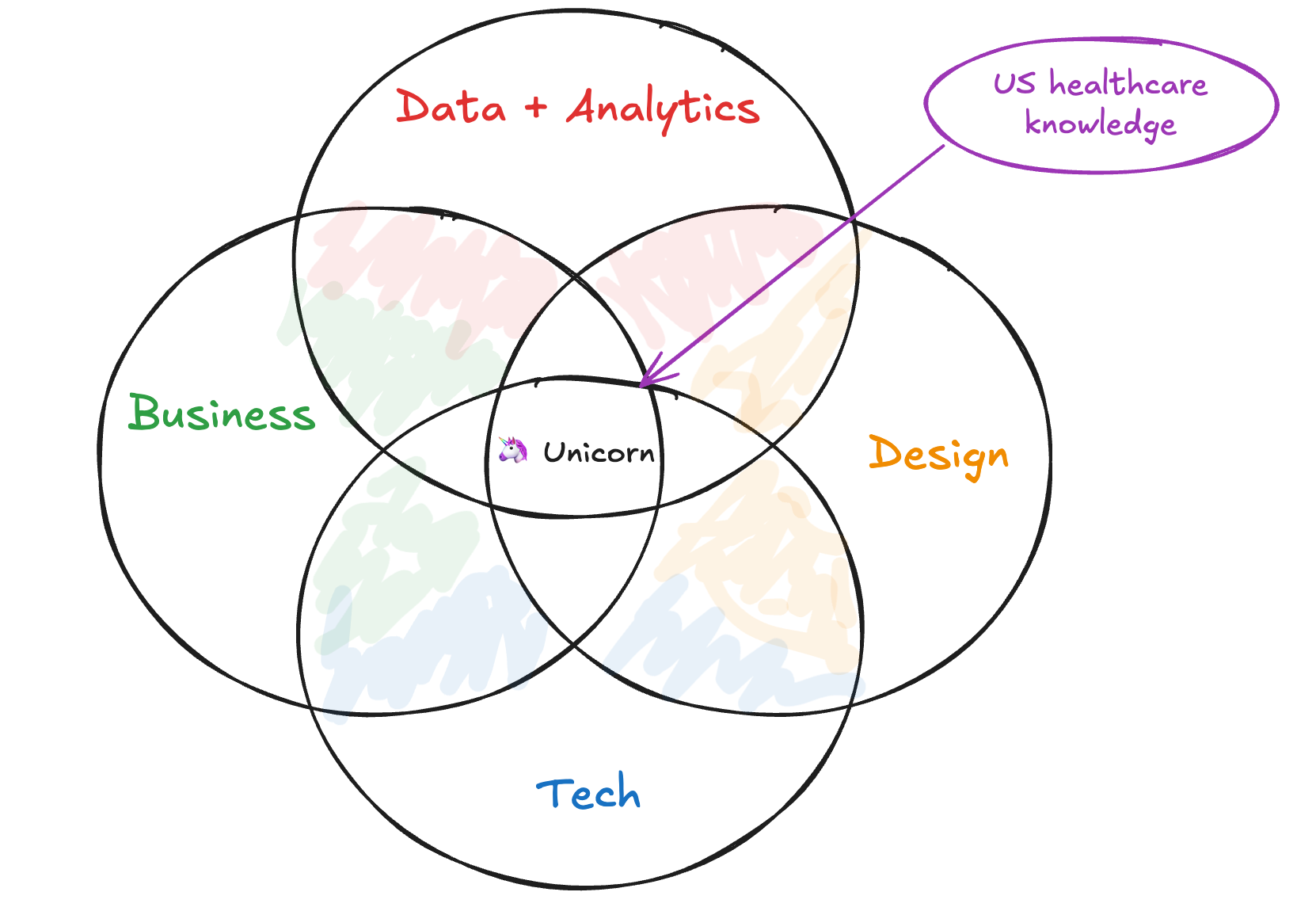
- Reasonable data science understanding
- Machine learning/AI experience
- Data governance appreciation
- Analytics proficiency
This is asking a lot of one person. True. Add in some element of data expertise and you have a future founder on your hands.
The demands are impossible. The job is technically impossible. That's why you are on a team. It's not on you but you need to bring context, creativity, and an ability to coach.
Team Dynamics & Collaboration
General PM Teams often include:
- Cross-functional squads (engineers, designers, marketers) helmed by the Product Trio (PM, Tech Lead, Design Lead)
- Customer feedback drives development
- Focus on feature shipping and user adoption
Data PM Teams:
- A similarly cross-functional squad but helmed by a Product Quad (Data PM, Tech Lead, Design Lead, and Data Lead) with data-centric specialists (data scientists, data engineers, analysts) added in
- Data quality drives development
- Focus on data accessibility and democratization
Data products are inherently more complex. Especially if they are B2B which 90% of them are. Balancing the quality risk along with the other four (value, usability, feasibility, and business viability per Marty Cagan) is just icing on the cake.
The Healthcare Reality Check
In healthcare, these differences become even more pronounced. When I was leading data product at Revive, we weren't just shipping features - we were shipping trust. We had to build the story for our healthcare partners while still maintaining strict controls on protecting patient data.
Healthcare B2B is "playing on hard mode". Building a data product in a regulated industry like US healthcare requires a focus on quality risk above all else.
Four Key Shifts That Nobody Talks About:
- The Risk Profile
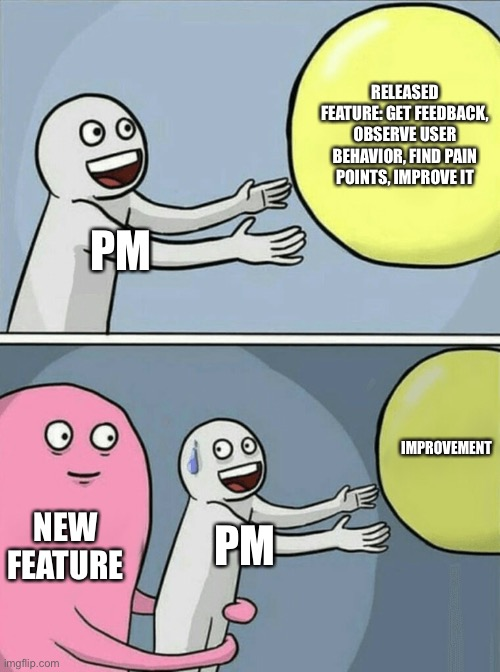
- General PM: Ship (potentially) buggy code, push a fix
- Data PM: Ship bad data, lose trust forever
- The Success Metrics
- General PM: Usage, engagement, retention
- Data PM: Data quality, decision velocity, trust signals
- The Customer Journey
- General PM: "Wow, this is great!"
- Data PM: "I don't trust this yet... but maybe..."
- The Team Dynamic
- General PM: "When can we ship?"
- Data PM: "How do we validate?"
Looking Ahead
As AI and ML become ubiquitous, these roles will continue to merge. But the fundamental differences in approach - particularly around risk, trust, and validation - will remain critical. As noted in the lead quote, growth is compounding, in markets and products, but trust can be lost in an instant.
Every product will have data components. But not every product will be a data product. Understanding this distinction will be an important skill for the next generation of PMs.
The Questions Nobody's Asking
- How do we measure trust as a product metric?
- What does "move fast and break things" look like when data quality is non-negotiable?
- How do we build data products that balance innovation with reliability + trust?
Would love to hear your thoughts. What differences have you noticed between Data PM and General PM roles in your work?

What Meta's 2025 Restrictions Mean for Data and Product Leaders
Meta's new healthcare ad restrictions aren't just another privacy update - they're a fundamental shift in how we'll have to think about healthcare growth. Drawing from my years measuring health system campaigns at Revive Health, I break down what this means for data and product leaders, why CDPs mig
Risk is what you don’t see.
In 2021, when Apple dropped iOS 14.5 along with App Tracking Transparency (ATT), the digital advertising world scrambled. Folks adapted. But Meta's latest announcement about healthcare advertising restrictions feels different. More targeted - pun intended.
I spent years at Revive (FKA Revive Health) building and measuring ad campaigns for health systems. The game was always about precision - finding the right patients, measuring conversions, optimizing spend all while preventing patient health information (PHI) exposure. We obsessed over metrics like cost-per-acquisition and return on ad spend (ROAS).
But starting January 2025, that playbook is going through another big shift.
What's Actually Happening
Two weeks ago, Meta quietly dropped some shocking news on healthcare/healthtech advertisers. Through a series of targeted emails, they announced two levels of restrictions:
- Fully restricted: Healthcare provisioning properties (think patient portals, app domains)
- Partially restricted: Healthcare marketing properties (corporate sites, lead forms)
The key impact? If you're in healthcare/healthtech, you likely won’t be able optimize for conversions anymore - at least not native in Meta Business Portal. No more tracking form fills. No more measuring patient acquisition costs. No more retargeting based on specific conditions or treatments.
Note: There are a ton of unknowns for everybody and folks are trying to get straight answers so all of this may be irrelevant in a couple of weeks.
As Chris Turitzin noted in last week’s Health Tech Nerds roundtable:
”If you're not able to send low funnel events, that changes everything in the way that you run meta campaigns... trying to run non-conversion optimized meta campaigns will understand that they just don't work from a profitability stance."
Why Now?
This isn't just Meta being cautious out of the blue. As Yulie Klerman, former LiveRamp healthcare lead explained during the roundtable: "We've seen changes in the last 4 years and specifically the last on the state privacy regulation in the states. When they explicitly call out healthcare information... they're getting closer to GDPR."
The writing has been on the wall. GoodRx's FTC settlement. The HHS guidance on tracking technologies. The proliferation of state privacy laws.
Inside the War Room: Notes from Yesterday's HTN Roundtable
Sometimes the best insights come from rooms full of people trying to solve the same problem. Last Tuesday’s Health Tech Nerds roundtable felt like a war room planning session - equal parts strategy meeting and group therapy. With so much still unknown, it was a bit similar to an OpSec briefing with panelists and folks trying to get a sense of the “known knowns” and the “known unknowns”.
Four patterns emerged that tell the story:
1. The Platform Pivot
”Shift to top of funnel video," Brian advised, sharing wins from brand lift studies. "We know it works."
But it's not that simple. Moving up the funnel isn't just a tactical shift - it's reimagining what "conversion" means in a world where we can't track it.
2. The CDP Question
Brett Gailey dropped what might be the most important insight: "We're a CAPI & event obfuscation only shop. Our Meta rep communicated to us as not being directly impacted."
A glimmer of hope? Maybe. But it requires serious technical infrastructure - pay attention to the CDP players like those specific to healthcare such as Freshpaint or a newcomer - Ours Privacy as well as cross-industry players like Segment.
3. The Compliance Paradox
Yulie Klerman, who built LiveRamp's healthcare vertical, reminded us of an uncomfortable truth: Even if you find technical workarounds, you're swimming in increasingly regulated waters.
”It's not just Meta's rules," she warned. "It's state privacy regulations, HIPAA, and public perception."
4. The Size Split
Large healthcare companies will play it safe. But as Chris Turitzin noted: "Small startups... I don't think they have that same risk."
Different companies, different risk tolerances, different approaches. Startups are going to play fast and loose with these rules cause they are under a different reality than layer players. This is known risk (this has always been true) but pay attention to when these startups grow. Do they keep the same bad habits?
The Health & Wellness Gray Zone
Here's a fun riddle: When is a health company not a health company? According to Meta... it's complicated.
The definition of "health and wellness" feels like one of those Supreme Court obscenity cases - they know it when they see it. But for those of us building products and measuring campaigns, we need something more concrete.
From the roundtable discussion, here's what we know right now:
Meta defines health & wellness as properties "associated with medical conditions, specific health statuses, or provider/patient relationships." Think patient portals, wellness trackers for specific conditions, or anything tracking health outcomes.
But here's where it gets messy:
- A fitness app? Probably fine.
- A depression tracking app? Restricted.
- A vitamin company? Depends on the claims.
- A healthcare scheduling platform? Welcome to the gray zone.
As one Meta rep told a roundtable participant: "Most health supplement brands will not be affected, unless it is a prescription or for a specific disease." But another participant's supplement brand got flagged. Classic.
The secret seems to lie in condition specificity. The more condition-specific your product or marketing, the more likely you'll face restrictions. Likely more to come here but a lot of unanswered questions at the moment.
The CDP Plot Twist
Here's the fascinating thing about constraints/regulation in healthcare tech: they often create new winners.
When Apple killed mobile tracking, Mobile Measurement Partners (MMPs) became essential overnight. When GDPR hit, consent management platforms had their moment.
Now? It might be the CDP's (Customer Data Platform) time to really shine. Being a middleman and a way for advertisers to offload liability could be a goldrush for the best positioned players.
But not just any CDP. Healthcare needs something different than most other industries. As I learned at Revive tracking multi-touch attribution across health systems - you need infrastructure that understands both technical compliance and healthcare's unique dynamics.
What Makes Healthcare CDPs Different
Think about your typical CDP. It's built for e-commerce, B2B SaaS, maybe fintech. But healthcare? That's a different beast entirely:
Event Hygiene
- Regular CDP: "Track everything, figure it out later"
- Healthcare CDP: "Track precisely what matters, with clear governance"
Identity Resolution
- Regular CDP: "More data = better matching"
- Healthcare CDP: "Clean data = compliant matching"
Activation Workflows
- Regular CDP: "Push to all channels"
- Healthcare CDP: "Push with purpose and protection - likely with a confirmation step“
The New Technical Stack
Based on the roundtable discussion, here's what the winning stack might look like:
Foundation Layer
- HIPAA-compliant CDP (like Ours Privacy or Freshpaint)
- Event obfuscation engine
- URL redaction system
Processing Layer
- Custom conversion definitions
- Privacy-safe identity resolution
- Compliant activation rules
Activation Layer
- Meta CAPI integration
- Cross-channel orchestration
- Compliance monitoring
As Brett Gailey noted in the roundtable, teams using this kind of setup might be insulated from Meta's changes. But - and this is crucial - only if implemented thoughtfully. More importantly - no one really knows yet and its unclear if Meta is even sure.
The Data Product Manager's Dilemma
If you're a data product manager in healthtech, you're probably asking:
- "Do we build this in-house?"
- "Which CDP vendors truly understand healthcare?"
- "How do we maintain performance while increasing privacy?"
The answer? It depends on your scale. But here's what I learned measuring campaigns at Revive: sometimes the most elegant solution is the most boring one. It’s ok if its complex (that’s reality) but don’t settle for complicated.
Start simple:
- Map your conversion events
- Document your privacy requirements
- Build clean activation workflows
- Test and iterate with compliance in mind
The Path Forward for Data and Product Leaders
If you're leading data, analytics, or product at a healthcare company, here's your playbook:
Rethink Measurement
- Build proxy metrics that don't rely on direct conversion tracking
- Get creative with engagement signals
- Focus on top-of-funnel indicators that correlate with intent
The reality is you never truly had ROAS down - don’t kid yourself.
As John Wanamaker famously said:
Half the money I spend on advertising is wasted; the trouble is I don't know which half
Every function (even accounting + finance) deals in assumptions and abfuscations - marketing and product simply have more unknowns. Accept it and figure out how to move forward.
Strengthen First-Party Data
- Double down on owned channels
- Build better internal attribution models
- Create measurement frameworks that don't depend on platform data
Use this as an impetus to shift from the buy side over to the build side. Get a better handle on your own data and tooling while investing in owned channels. Don’t over-rotate but don’t be completely dependent on a company like Meta - they don’t care about you or your patients.
Explore Alternative Channels
- Test channels where healthcare isn't as restricted (but be careful!)
- Build cross-channel attribution models
- Focus on content engagement metrics
When I helped instrument campaigns at Revive, we discovered something counterintuitive: restrictions often revealed better channels we'd ignored. Some thoughts:
- Reddit: Shockingly good for healthcare discussions. Their ad platform is like Meta circa 2015 - less sophisticated but more permissive. Just watch the compliance as it’s easy to get in trouble here.
- Programmatic Healthcare Networks: Yes, they're expensive. Yes, they're old school. But they understand healthcare compliance better than any social platform.
- TikTok: Before you roll your eyes - their healthcare policies are still evolving. This is both an opportunity and a risk.
- Point-of-Care Networks: Remember these? They're having a renaissance moment.
- LinkedIn: Especially for B2B healthcare. They're the tortoise in this race - slow, steady, and surprisingly stable on privacy.
The secret? Build your measurement framework first, then pick your channels. Not the other way around.
The Bigger Picture
This feels like a tipping point. But maybe that's good.
Healthcare data has always lived in a world of constraints. HIPAA wasn't the end of healthcare marketing. Neither was the HITECH Act. Or state privacy laws.
Each time, we adapted. We got better and hopefully did better by our patients. We built smarter systems and maybe this pushes folks to go back to the basics - build a product or service that produces value for patients and a business that supports it sustainably.
What Happens Next
For data and product leaders, the next few months are crucial. The situation is going to change and hopefully, Meta will give folks more clarity ( to say nothing of the uncertainty on what brands
Ask yourself:
- How can we measure success without relying on platform data?
- What does "good" attribution look like in a privacy-first world?
- How do we balance growth with increasing privacy demands?
The answers might surprise you. They usually do.
Because sometimes the best innovations come from constraints.
And healthcare data products? We've been innovating around constraints since day one.
10 Uncommonly Useful Observations on Product-Market Fit for Data Products
Forget what you know about product-market fit for traditional SaaS—data products play by a different rulebook. In this post, I share ten uncommonly useful observations from my years in the healthcare data trenches, challenging conventional wisdom and providing a roadmap for success in the complex wo
As a veteran in the healthcare data product space, I've seen my fair share of successes and failures when it comes to achieving product-market fit. While many principles from traditional SaaS products apply, data products have their own unique challenges and opportunities. Here are ten uncommonly useful observations that can help you navigate the complex landscape of product-market fit for data products.
1. The "Aha!" moment is often delayed
Standard SaaS expectation: Users should have an immediate "Aha!" moment upon first use.
Data product reality: The true value of a data product often emerges over time as patterns and insights accumulate. Your onboarding process needs to set the right expectations and provide early wins while building towards the bigger picture.

2. Your product is only as good as your data sources
Standard SaaS expectation: Product quality is primarily determined by features and user experience.
Data product reality: The quality, freshness, and relevance of your data sources can make or break your product. Invest heavily in data acquisition, cleansing, and integration. Remember, garbage in, garbage out.

3. Customization is not just a feature, it's a necessity
Standard SaaS expectation: One-size-fits-all solutions with minor customization options.
Data product reality: Every organization's data landscape is unique. Your product needs to be flexible enough to accommodate diverse data structures, integration points, and use cases without becoming overly complex.
4. The sales cycle involves education and change management
Standard SaaS expectation: Demonstrate value quickly and close the deal.
Data product reality: Selling a data product often requires educating prospects on data literacy, changing existing processes, and aligning multiple stakeholders. Your sales process should include elements of consultative selling and change management.
5. Success metrics are often indirect
Standard SaaS expectation: Direct metrics like user engagement and feature adoption indicate success.
Data product reality: The true impact of your data product might be several steps removed from direct usage. Success could manifest as better decision-making, cost savings, or revenue growth for your clients. Develop ways to track and attribute these indirect benefits.

6. The "network effect" is data-driven
Standard SaaS expectation: More users lead to more value through increased interactions.
Data product reality: More data often leads to better insights and predictions. Consider how you can create virtuous cycles where using your product generates more valuable data, which in turn makes the product more valuable for all users.
7. Regulatory compliance is a feature, not a bug
Standard SaaS expectation: Compliance is a necessary evil.
Data product reality: In regulated industries like healthcare, robust compliance features can be a major selling point. Embrace compliance as a core feature and competitive advantage, not just a checkbox.

8. The product evolves with the data science field
Standard SaaS expectation: Periodic feature updates based on user feedback and market trends.
Data product reality: Advances in data science and machine learning can fundamentally change what's possible with your product. Stay on the cutting edge and be prepared to make significant pivots as new techniques emerge.
9. User personas include both humans and algorithms
Standard SaaS expectation: Focus primarily on human end-users.
Data product reality: Your product might need to serve both human analysts and automated systems or AI models. Design your APIs and data outputs with both in mind.

10. The MVP is more complex but potentially more powerful
Standard SaaS expectation: Build a simple MVP to test core assumptions quickly.
Data product reality: Your MVP needs to include not just basic features, but also data pipelines, quality checks, and initial models or analyses. While this makes the MVP more complex, it also means you're testing a more complete value proposition from the start.
Conclusion
Achieving product-market fit for data products requires a nuanced understanding of the unique challenges and opportunities in this space. By keeping these observations in mind, you can avoid common pitfalls and focus on the elements that truly drive value for your users.
Remember, in the world of data products, your goal isn't just to fit the market — it's to evolve with it, shape it, and ultimately, to help your users make better decisions through the power of data.
In this era of frothy "generative AI" talk and valuations, data has become the lifeblood of organizations, powering innovation and fueling competitive advantage. The much-hyped AI models and products are so fascinating because they were trained on vast amounts of curated, labeled, and sourced data - both clean and messy - collected over the past few decades.

Yet, amidst the rush to invest in sophisticated data infrastructures like warehouses and lakes, a critical disconnect has emerged. Executives often find themselves in the dark when it comes to harnessing the true value of their data assets. It's like they're sitting on a treasure trove but haven't quite figured out how to unlock it. As a result, data teams are undervalued, their challenges unaddressed, and their potential constrained by inadequate resources.
We have powerful hammers in our hands, trying to find those nails. If the aim (clean data and understanding) is only slightly off, self-inflicted damage is highly likely.
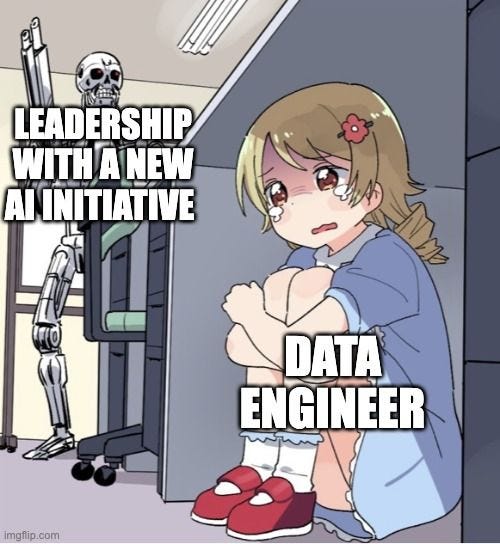
Enter the Data Product Manager (DPM) – the unsung hero who's about to shake things up and revolutionize the way we leverage data in the age of AI. A continuation of the BI trend and analytics in organizations.
The ideal DPM is a rare breed, combining technical expertise with business acumen and a passion for solving real-world problems with data. They are the translators, bridging the gap between complex data capabilities and strategic business objectives.
Imagine a skilled data analyst like Anna, who's been knee-deep in customer data for years. One day, she has a lightbulb moment and realizes her true calling is to bridge the gap between the tech world and the business realm. She transforms into a DPM, becoming the translator everyone's been waiting for - with a data background, customer and stakeholder empathy, first principles thinking, and ideally, a growth focus.
Now, being a DPM is no walk in the park. It's a juggling act with seven critical responsibilities:
- Setting crystal-clear goals for the data team, keeping them laser-focused.
- Connecting the dots between data initiatives and overarching business strategies.
- Crafting a roadmap for data products that make a difference.
- Ensuring seamless collaboration and alignment across teams.
- Upholding data quality standards, guaranteeing insights you can bank on.
- Quantifying the impact of data products, keeping the purse strings loose by finding ROI.
- Advocating for the resources the data team needs to knock it out of the park.
By fulfilling these responsibilities, DPMs align data initiatives with business goals, architecting requirements for projects that personalize customer interactions, optimize inventory levels, or reduce churn. They are the guardians of data quality, the advocates for resources, and the storytellers who quantify the transformative potential of data-driven decision-making.
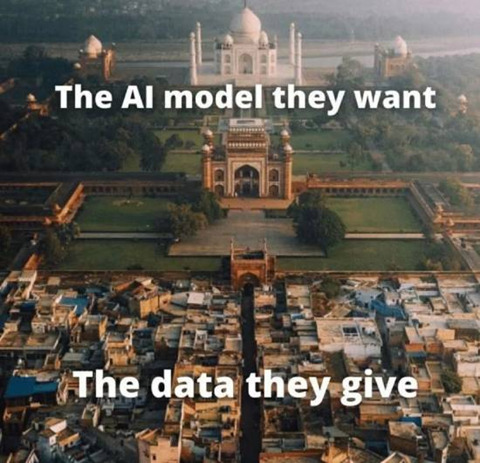
In the age of generative AI, the DPM's role takes on even greater significance. As AI models become increasingly sophisticated, their performance hinges on the quality and relevance of the data they are trained on. DPMs must apply first principles thinking, breaking down problems to their fundamentals and questioning every requirement to ensure that data pipelines are reliable and focused on the intersection of customer and business value.
However, it's crucial to recognize that the typical dynamics between startups and incumbents do not apply in AI as they did in previous technology revolutions like mobile and the Internet. As Jason Cohen astutely points out, ignoring this difference can be perilous for AI startups.
Incumbents are not risk-averse when it comes to AI; they're embracing new technology and uncertain markets, spending historic amounts of money and time. They already have the innovation and the data, while startups struggle to find distribution in over-saturated markets. Top AI and software engineering talent are happy working at incumbents, with above-market rates, exciting projects, healthy budgets, and the ability to impact huge numbers of customers quickly.
Furthermore, there's no such thing as "the AI market" unless you're competing directly with OpenAI. The market for chatbots and SEO tools is the same as before, now with stiffer competition. The typical startup strategies relying on the advantages of David against Goliath are largely untrue in AI.
As we navigate the complexities of the digital age, the rise of the DPM signals a broader shift toward recognizing data as a strategic asset. Much like how product managers revolutionized software development, DPMs are poised to transform data teams from cost centers into revenue-generating powerhouses. By fostering communication, collaboration, and visibility, DPMs will elevate the strategic importance of data teams and unlock the full potential of data-driven innovation.

The future is data-driven, and the DPM is the catalyst that will propel organizations forward. As data's importance continues to grow, so too will the demand for skilled DPMs who can navigate the intersection of technology and business strategy. By embracing the power of generative AI, applying first principles thinking, and developing strategies tailored to the unique dynamics of the AI landscape, DPMs will shape the future of business, turning raw data into actionable insights and transforming the way we work, live, and innovate.
In this era of unprecedented opportunity, the rise of the DPM represents a shift in how organizations approach data. It is a call to recognize the strategic value of data and invest in the talent and infrastructure necessary to harness its full potential. The journey from data to AI is not merely about technology (another hammer); it is about vision (why), strategy (how), and the human touch (who) that connects the dots.
Some great resources to learn more:
- The Value of Data - David Jayatillake
- AI startups require new strategies: this time it's actually different - Jason Cohen
Stay strategic,
Kevin
A New Approach for Complex Environments:
As a young business analyst, I started my first contract in a warehouse and operations plant. A hundreds of years old manufacturer that had no ERP (enterprise reporting platform) or inventory tracking yet was wildly profitable for decades (their products were sold in cans but not those you are thinking).
Me and a small team were tasked with onboarding an inventory tracking system in this old-school environment. After weeks of prep and training, we were on-site for dozens of shifts as we handed out barcodes and scanners to employees.
We noticed something off on the third day.
Inventory levels kept ticking down. Throughput was constrained and manual adjustments increased. We thought the sync was delayed for the first day, the barcodes were placed incorrectly, or the scanners were failing.
Then I kept walking the floor. In the packing room, I noticed scanners were sitting on benches and their chargers - not good.
I approached Lenny (floor manager) and pointed this out to him.
,
“Out of sight, out of mind son” he replied.
I took a step back that evening and wondered about this problem.
Then, we bought holsters for each floor employee and let them customize their scanners.
Inventory levels went back to expected in a week. Problem solved for a couple hundred dollars.

In the ever-evolving fields of data and product development, especially in healthcare, we need strategies that break free from conventional boundaries. Not everything works when everything is meant to be a system in itself.
A first principle is a “basic, foundational proposition or assumption that cannot be deduced from any other proposition or assumption.”. This philosophical approach encourages us to strip problems to their fundamental truths, which is crucial for teams dealing with complex data and product challenges.
4 core aspects of data product management and first principles:
- Breakdown the problem into core components - question every requirement
- Create a data product strategy that accomplishes the mission - the intersection of customer and business value
- Build a reliable data pipeline - product thinking to process
- Win through others - be a coach
First Principles for Data Product Teams
1. Breakdown the Problem into Core Components - Question Every Requirement
First principles thinking in data product management starts with deconstructing complex problems into their fundamental elements.
Understanding the analytical (really the business) question - the so what or why - is critical.
Complexity is not the goal in and of itself. No one gets points for difficulty in business. Question every requirement. Break down every component into its parts.
Encouraging yourself and others to question the assumptions you have is critical. Think of an EHR. EHRs, at their core, are financial and billing tools and those with poor usability have been connected with more medical errors. On top of that, the average ER doc has to make 4,000 clicks in a single shift.
Does this have to be true? Why are all of these needed? Start with each factor of how something came to be and you are on the right track.
2. Create a Data Product Strategy that Accomplishes the Mission - The Intersection of Customer and Business Value
A successful data product strategy aligns with both customer needs and business goals. All employees should be focused on fulfilling the company's mission to profit or purpose, maybe both.
Most team members are working directly toward the business goal by a product or service to customers: building (engineers, data, and designers), go-to-market (marketing and sales), optimizing the business (analysts and resourcing), or helping customs (support).
Product management doesn't directly build or operate. The goal is to inform the operations to optimize the intersection of business and customer value. How does that get done? By defining a strategy - specifically a data product one at that.
This includes four components:
- Goal and outcomes
If you don't know where you are going, you are already on your way
Go back to that first principle and a good data product manager will incessantly ask the hard questions in a quest of defining the mission they follow. What does the world look like for that goal or vision to be real?
Data Product Managers (DPMs) also need to know what other teams aim for. DPMs are intertwined deeply with other teams as your product is either an input or output of another. See it as insurance to make sure you are not colliding with others.
- Customers
“The customer is always right” and “customers don’t know what they want” are both accepted business wisdom. The line between “inspiringly bold” and “foolishly reckless” can be a millimeter thick and only visible with hindsight.” - Morgan Housel
That goal may be lofty and well-intentioned, but if no one pays for it or those that do are too few and far between, then what is the point? Customer input is the quantitative and qualitative data you develop and a sense you must cultivate.
What are customers signaling? Not directly, but what are they hiring to get a job done, and how are you, as a data product, helping your customers make progress in the jobs they need to get done?
That signal is worth listening to and what you hear from customers and what they do is the ultimate validation of your goal and efforts.
- Environment
Nothing is built in a vacuum. If you see an opportunity, others likely have as well.
When looking externally, think of PESTLE (Political, Economic, Social, Technological, Legal, and Environmental) - what changes affect your company, input data, and customers' interest?
While much focus is on the external factors in the environment (competitors and market forces), you should never discount the company environment and dynamics. Most importantly with this, understand the cyclical nature of teams and focus - everything is always in a state of change, whether you choose to see it or not.
Calm plants the seeds of chaos.
- Constraints
Lastly, any product team needs to understand the limits of the team that is doing the building. Just as a captain must understand the crew, time, and fuel to make a journey successful, DPMs will also.
People are the biggest constraint for product teams but the second most important constraint for data product teams.
Data, as mentioned, and its myriad components are the largest constraint on a data product once the goals, customers, and environment are better understood.
- Is the quality appropriate?
- Is there governance, documentation, and observability?
- What are the biases and limitations?
- How stable and extensible is the data?
Money is a critical factor in determining the scope and scale of a data product. The budget allocated dictates the quality and quantity of resources that can be employed, including technology, tools, and personnel. These constraints require a balancing act between desired features and cost implications.
Acquiring new data sources, spending on third-party tools, investing in data engineering, or freeing up resources for GTM (go-to-market) is critical to determining a trajectory.
Just like any other product, you can't consider only the initial development but also the maintenance and updates. Scaling, enhancements, quality systems, ETL updates, and product adaptation to changing needs.
Time constraints impact the speed at which a data product can be brought to market. A limited timeline might necessitate compromises in product features or depth of data analysis.
In fast-evolving industries, especially in this age of generative AI, where everything seems to change by the minute, time is crucial to ensure the data product remains relevant and competitive. Delays in development can result in missed opportunities or outdated solutions by the time of launch.
Thanks for joining - see you next time!
Part 2 - Next time principles 3 + 4
- Build a Reliable Data Pipeline
- Win Through Others
Where to learn more
Recommend books, articles, and other resources for readers to deepen their understanding of First Principles Thinking.
- “The Great Mental Models” by Shane Parrish for versatile thinking frameworks.
- "Inspired" by Marty Cagan for his influential text in developing product thinking.
- "Same as Ever" by Morgan Housel for a broad psychological look at the things through history that never change.
20 Leadership + Product Lessons from a Healthdata Guy
Here are 20 lessons covering building data products, working with teams, and being a better version of who you already are.
Brian Balfour, founder of Reforge, went through an excellent list of ten lessons with Lenny Rachitsky this week. I thought this was such a great interview, and his lessons were inspiring (I even borrowed a couple), so I made a list of my own.
Navigating healthcare data products has sharpened my approach to leadership. Halfway through my career, I've stacked up lessons. Some through triumphs, others through missteps.
Data is our lived experience. Knowledge is the interpretation of it. Wisdom is the application.
Here are 20 lessons covering building data products, working with teams, and being a better version of who you already are.
1) There are really only two criteria for products success:
- Does it solve a user's problem well?
- Does it help the business move forward?
That’s kind of it. Sorry 🤷🏻♂️
2) Garbage in, garbage out.
Data isn’t magic. Neither are LLMs, ML, algorithms, systems, or anything else.
Quality matters, especially in healthcare. Treat your data and your people well, and incredible things can happen.
3) Do the opposite.
When building an analytics team at a healthcare marketing agency, we would constantly be asked to go big - build a flashy brand launch.
Then, six months later - doctors on billboards.
You don’t stand out by copying others. When you say you are “better,” all everyone hears is “the same.” Be different.
But when you zag, others will follow.
So then zig. And repeat.
4) Follow the incentives.
Healthcare in the US is a mess. Everyone knows it.
Why isn’t it changing? Follow the incentives or, more simply, “the money.”
Your idea might help millions, but as Sister Irene Kraus coined, “No Margin, No Mission.”
The Iron Triangle of Healthcare still holds. Access, Quality, or Cost - pick two.
5) Bring solutions, not just problems.
Leaders context switch.
A lot.
This is doubly true at startups. Act as a magnifying glass and focus a leader on relevant info in an area; don't be a "fisheye lens" and scatter the focus. Be positive, avoid politics as much as possible, and show consistent initiative.
6) Plan to replan.
As I learned in my time as an officer: battle plans never survive first contact with the enemy.
Replace the enemy with “the market,” which still holds. The way you react sets the tone for the entire team and organization.
It requires you to be contradictory elements at once: measured but decisive, calm but quick-thinking, and systematic but flexible.
It takes practice, but know that the team needs you when you contact “the market.”
7) Fish or teach how to fish. Know the time for both.
There is a time for executing and a time for strategy. A time for focus and a time for discovery.
The divergence and convergence of the Double Diamond depends on where you are.
It’s okay to build and okay to plan. Learn when to do either.
8) Praise in public, punish in private.
Share compliments and praise (they must be genuine) generously and immediately. Spread liberally, but remember - only praise if it's genuine.
Provide feedback on time, in person (or as close to it as possible), and most importantly, in a one-on-one with psychological safety.
9) KISS: Keep it simple, stupid.
Lean towards simplicity, design, and empathy. Accept complexity when necessary.
Whether it’s data, ML, healthcare, consulting, people, teams, or any other options, try the simple option first. Accept complexity when necessary.
10) Never underestimate the power of small, focused teams.
Building 0-1 products, agile thinking, and working with incredible men and women in the military all point to a fundamental truth - small, empowered groups with a vision do amazing things.
From the Law of Small Teams to the reality of Conways Law, small teams with autonomy, complementary skills, and a vision can get it done. Fact.
11) Users rent or hire your product.
Understand the bigger picture and don't take them for granted.
12) When you try to be everything to everyone, you accomplish being nothing to anyone.
True for products, companies, philosophies, and people.
Be opinionated. Stand for something. Stand against something else.
13) Problems never end (and that’s okay).
When you solve one problem, congratulations! You’ve graduated to another, likely more difficult, one.
Expect this, relish the challenge, and be excited about a problem - not your solution.
14) Do not be a slave to tools. Tools change, your expertise improves.
I fell for it early. Tableau, that is.
A tool that inspired me; it was intoxicating and introduced me to flow state.
More importantly than the tool, I discovered data analytics. I discovered data modeling. I discovered products. I discovered design.
Tools are hammers. Problems are nails.
Don’t focus on hammers - what matters are the nails.
15) Moats weather and dissolve. Build bridges, so you don't become an island.
Strategy eggheads love to talk about “moats.” Ways to protect and play defensive.
It may work in the short term but rarely in the long term.
Moats protect you, but markets move on, and users look elsewhere if you aren’t careful.
Build bridges - especially in healthcare. We need more of those.
16) Trust, but verify.
Give the benefit of the doubt and lead with positive intent.
But keep a sharp eye out.
17) God first, patients second, team/family/friends/customers third, yourself fourth, company last.
Keep perspective.
18) Be dependable and build relationships. Healthcare and, specifically, data is small, and you will see these people again.
Life is small. Healthcare is really small; healthcare data is really, really small. True in any other market especially in B2B or in circles you should care about.
Be kind, remember that perspective, and help others out. You never know when you might need them.
19) Think in systems, speak in structures, act in experiments.
Systems thinking is your superpower if you want to build in healthcare or work in data. John Cutler is one of the best at this.
Don’t speak in systems. Speak in stories, anecdotes, summaries, and with purpose. This is what moves people and conveys purpose.
“Strong opinions, loosely held” is a great mantra for operating. You know what you know, but remember - plan to replan.
20) Accept the things you cannot change, find the courage to change the things you can, and develop the wisdom to know the difference.
Serenity Prayer - Reinhold Niebuhr
Christianity and Stoicism - two philosophies that have shaped me and many before me. It's good to have a compass.
What are yours? Let me know!

Psychological safety is NOT easy, comfortable, "sunshine and rainbows", or BS.
It is hard, confronting, realistic, and grounded.
Without constructive conflict, you fall for the Abilene Paradox (link in comments) when groups choose to conform rather than speak up; leading to a decision that reflects the preferences of no one.
How do you get to this state as a leader of cross-functional data product teams?
-------------------------------
Team of Teams by McChrystal and Playing to Win by Lafley and Martin suggest the following:
- Engender Trust: It won't happen overnight and it won't happen without work.
Make it an explicit priority. Establish norms for how failure is handled.
Embrace productive conflict and the Socratic method. Yet lead by example - if you fail to build that trust in your actions as a leader - Embrace Learning: Frame working as a learning problem, not purely an execution problem.
Teams and therefore people are constantly asserting a hypothesis, testing it, and learning from it.
Embrace this. - Practice Humility: Recognize your own fallibility and biases. Decisions should not be from your singular point of view but one that moves toward open communication.
Welcome feedback and respectful challenge and check your ego at the door. - Nurture Curiosity: Pre-mortems. "How might we's..." Product discovery. Retrospectives.
There are dozens if not an infinite number of ways to cultivate curiosity.
The goal is for everyone to ask a lot of questions > disagree and commit > build and test > analyze to start the loop all over again.
10 Key Elements for Creating Successful Data Products: Data Product Anatomy
Master the art of data product creation with 10 key elements: Adaptable, Specialized, Discoverable & more! 🚀🌟
🚀 Greetings, data enthusiasts! Kevin here, and today we're going to delve into the fascinating world of data products. In this age of information, data is an invaluable asset, and effectively utilizing it can set your organization apart from the competition.
So, let's dive right in and examine the essential components for creating successful data products that not only achieve your business objectives but also engage your users. Without further ado, let's embark on a journey to explore the anatomy of data products and the 10 key elements that will help you understand and build impactful data products
🤔 Data Product vs. Data As A Product: What's the Difference?
🧬 Data Product
A data product is any technological product or element that relies on data to achieve its primary purpose. Think of it as a tool that uses data to solve problems and provide insights.
📱 Data As A Product
Now, "data as a product" is when you treat data itself as a valuable commodity. It's like transforming data into a shiny new gadget that your customers (or internal team members) want to get their hands on. This approach helps democratize data by making it more accessible, usable, and valuable to everyone in the organization.
👉 Remember: a "data product" uses data to achieve its goal, while "data as a product" means data is the actual product being offered. Data as a product is a subset of a data product. Applying product thinking to data management.
Now that we've got that cleared up, let's move on to the main event!
🧬 10 Key Elements of Data Products
1. Adaptable 🌿
To create a successful data product, it should be adaptable and seamlessly integrate with various inputs and outputs. It should effortlessly expand to accommodate new data sources and adapt to changing user needs. For instance, a data product should have the ability to connect with different databases and platforms, ensuring its usability across multiple systems.
2. Discoverable 🔍
Make your data product easily found and accessible without being hidden or restricted. Users should be able to locate it quickly and understand how it can benefit them. This includes having clear documentation, intuitive navigation, and easy-to-understand metadata.
3. Specialized 🎯
A successful data product must address a focused set of valuable problems for external customers. By having a clear purpose, the product can be designed to effectively solve these specific problems. This ensures that the data product remains relevant, efficient, and valuable to its users.
4. Fortified 🏰
Security and stability are crucial for any data product. Your product should ensure reliable data handling and protect sensitive information. This includes having strong access controls, data governance rules, and thorough testing to ensure data integrity and security are enforced.
5. Contextual 📚
A successful data product should maintain a historical record of its purpose and problem-solving context, including a data dictionary and external references. This helps users understand the data product's history and evolution, making it easier for them to trust and use it effectively.
6. Engaging 🎉
To capture the interest of your target audience, your data product should provide relevant and valuable insights. This can be achieved through interactive visualizations, easy-to-understand reports, and personalized recommendations. By making your data product engaging, you'll encourage users to interact with it more frequently and derive greater value from it.
7. Loveable 💖
A successful data product should exceed the minimum loveable product standard, making it approachable and user-friendly. This means prioritizing usability, design, and overall user experience. By creating a product that users enjoy using, you'll increase adoption and drive success.
8. Scalable 📈
A successful data product should be designed with scalability in mind. As your user base grows or your data volume increases, your data product should be able to handle the increased workload without compromising performance or functionality. This includes considering the infrastructure, data processing, and storage requirements needed to support your data product in the long term.
9. Actionable 💡
Your data product should provide insights that drive decision-making and enable users to take action based on the information it provides. The key is to present data in a way that helps users make informed decisions, whether that's through clear visualizations, relevant metrics, or user-friendly interfaces. By making your data product actionable, you'll empower your users to leverage the insights it provides effectively.
10. Collaborative 🤝
A successful data product should promote collaboration among its users, encouraging them to share insights, discuss findings, and work together towards common goals. This can be achieved by integrating features such as comments, annotations, or sharing options within the data product. By fostering a collaborative environment, your data product will become a valuable tool that helps your users work together more effectively.
🌟 Real-life Data Product Examples
🎬 Netflix: Adaptable, Engaging, and Loveable
Netflix has transformed the way we consume entertainment with its data-driven recommendation engine. By analyzing user preferences and viewing history, Netflix provides personalized content suggestions to keep users engaged. The platform seamlessly adapts to new data inputs, such as user behavior, content availability, and device usage, to enhance its recommendations. Netflix's engaging user interface and easy-to-use features make it a loveable data product that keeps users coming back for more.

🧠 Einstein AI (Salesforce): Specialized, Fortified, and Contextual
Einstein AI is Salesforce's artificial intelligence solution that offers specialized data products tailored to various industries and use cases. By leveraging machine learning algorithms and natural language processing, Einstein AI enables organizations to automate processes, gain insights, and make data-driven decisions. The platform is fortified with robust security features, ensuring data protection and compliance. Additionally, Einstein AI maintains context by integrating with Salesforce's extensive ecosystem, allowing users to seamlessly access relevant data and insights.

🏠 Airbnb: Adaptable, Fortified, and Loveable
Airbnb revolutionized the short-term rental market with its data-driven dynamic pricing algorithm. This data product helps hosts optimize their rental prices based on factors such as location, demand, and seasonality. The algorithm continuously adapts to market conditions and user preferences, providing accurate pricing suggestions to maximize revenue for hosts. Airbnb prioritizes data security to protect user information and offers a loveable, user-friendly interface that appeals to both hosts and guests.

Conclusion 🚀
Creating successful data products requires a deep understanding of the product's anatomy and how it fits within your organization's ecosystem. By considering the key factors discussed above, you'll be well on your way to developing data products that not only achieve your business objectives but also delight your users. Remember, successful data products are adaptable, specialized, discoverable, fortified, contextual, engaging, loveable, scalable, actionable, and collaborative! Good luck! 🌟
